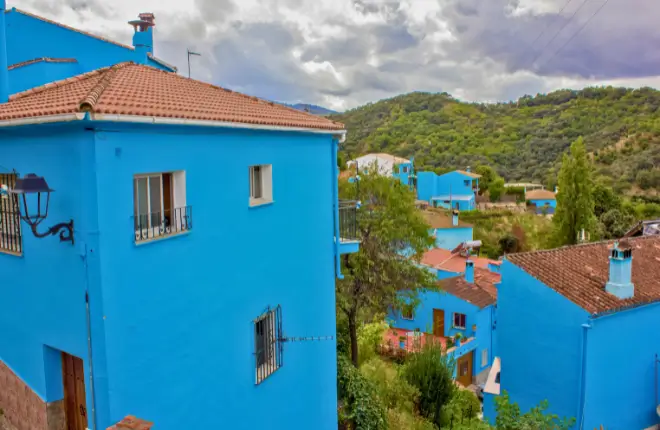
1. 🌈 There’s a Town Where Every House Is Painted Blue
- The village of Júzcar in Andalusia was originally painted blue in 2011 as a promotional event for The Smurfs movie. The locals voted to keep the color after tourism surged. Surrounded by mountains and hiking trails, it now blends fantasy with Andalusian charm. It’s often called “The Smurf Village of Spain.
2. 🍅 Spain Hosts the World’s Largest Food Fight
- Every August, the town of Buñol in Valencia holds La Tomatina, where thousands of people throw overripe tomatoes in the streets. What started as a local dispute in 1945 is now a global spectacle requiring advance registration. The fight lasts about an hour, followed by communal hosing down and street cleaning. It’s chaotic, colorful, and uniquely Spanish.
3. 🍷 Spain Has a Wine Battle Every Year
- In the town of Haro, La Rioja, the Batalla del Vino (Wine Battle) takes place every June. Participants dress in white, climb a nearby hill, and drench each other in red wine using buckets, bottles, and water guns. It’s messy, joyful, and set in the heart of one of Spain’s top wine regions. After the battle, traditional food and dancing follow.
4. 🎬 Game of Thrones Filmed in Multiple Spanish Locations
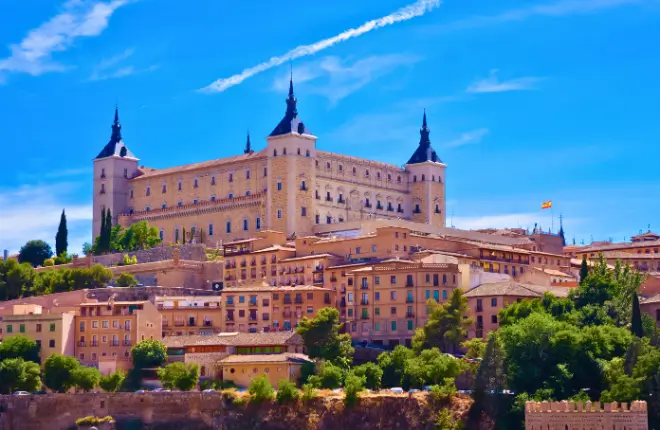
- Spain served as the backdrop for several Game of Thrones settings. The Alcázar of Seville became the palace of Dorne, Gaztelugatxe in the Basque Country was used for Dragonstone, and Córdoba’s Roman Bridge stood in for Volantis. Fans can visit these real-world filming sites on themed tours. It boosted tourism and global attention to Spain’s historical landmarks.
5. 🥘 Paella Originated as a Farm Worker’s Dish
- Paella, now a national culinary symbol, began as a simple rice dish cooked over fire in the rice fields of Valencia. It traditionally included rabbit, snails, and seasonal vegetables. Seafood versions became popular later with the rise of coastal tourism. Today, Sunday paella is a family tradition across Spain.

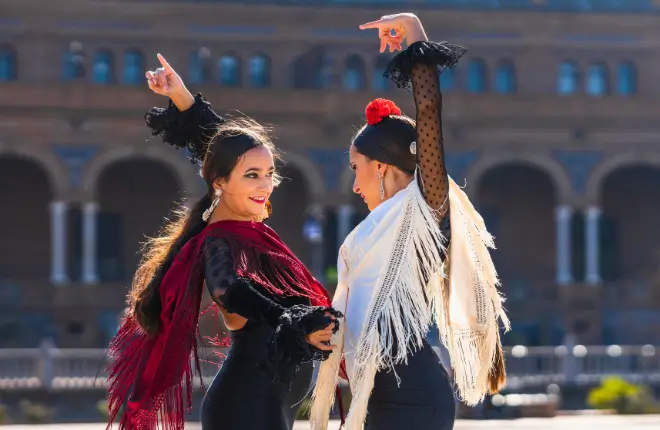
6. 💃 The Flamenco Scene Captured the Soul of Rural Spain
- The flamenco moment in Zindagi Na Milegi Dobara was filmed in the quiet village of Alájar in Huelva, Andalusia. Set in a rustic courtyard with live music and wine, the scene highlighted the region’s deep artistic traditions.Its authenticity and atmosphere drew attention to Spain’s lesser-known villages, where flamenco is not a performance but a way of life. Many travelers now visit Andalusia to experience this cultural depth firsthand.